
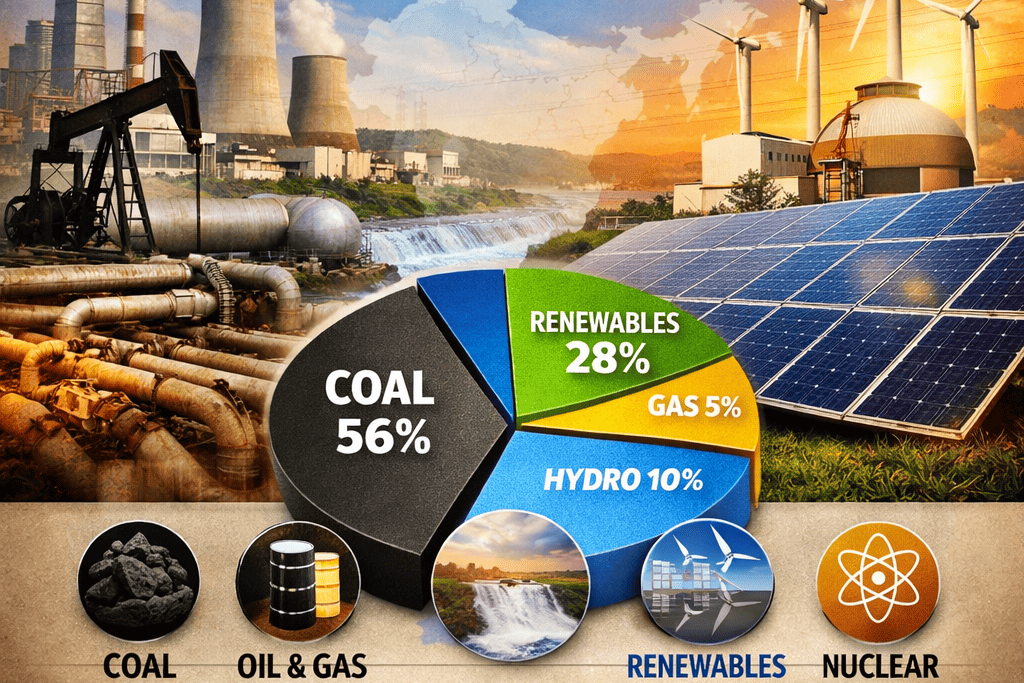
India’s Commercial Energy Production Scenario
India’s energy sector has been expanding rapidly due to industrial growth, urbanization, population increase, and rising electricity demand. Commercial energy refers to energy sources that are produced and sold in the market for industrial, transport, agricultural, and domestic use. These sources form the backbone of modern economic development.
In 2026, India stands among the largest energy producers and consumers in the world. The country has been working to balance three major goals. Meeting growing energy demand, improving energy security, and shifting toward cleaner energy sources.
India’s commercial energy production mainly comes from coal, petroleum, natural gas, hydroelectric power, nuclear energy, and renewable energy such as solar and wind.
Major Commercial Energy Sources in India
1. Coal
Coal remains the dominant source of commercial energy in India. It is mainly used in thermal power plants for electricity generation and in industries such as steel and cement.
India has large coal reserves located in states such as Jharkhand, Odisha, Chhattisgarh, and West Bengal. Most electricity in the country is still generated from coal based thermal power plants.
Even though renewable energy is growing, coal continues to play a central role in ensuring stable power supply.
2. Petroleum (Crude Oil)
Petroleum is an essential commercial energy resource used primarily in the transportation sector, aviation, and petrochemical industries.
India produces crude oil in regions such as:
• Mumbai High offshore fields
• Assam oil fields
• Gujarat oil fields
• Krishna Godavari Basin
However, domestic production is limited. As a result, India imports a large portion of its crude oil requirement from countries in the Middle East and other regions.
3. Natural Gas
Natural gas is considered a relatively cleaner fossil fuel compared to coal and oil. It is widely used in fertilizer industries, electricity generation, city gas distribution, and household cooking.
India has been expanding gas pipeline infrastructure and city gas networks to increase the share of natural gas in its energy mix.
Major natural gas sources include:
• Krishna Godavari Basin
• Mumbai offshore fields
• Assam and Tripura gas fields
4. Hydroelectric Power
Hydropower is generated by using the energy of flowing water stored in dams and reservoirs. It is a renewable and environmentally friendly energy source.
Major hydroelectric power plants are located in mountainous regions such as:
• Himachal Pradesh
• Uttarakhand
• Jammu and Kashmir
• Northeastern states
Hydropower also helps in irrigation, flood control, and water supply.
5. Nuclear Energy
Nuclear power provides reliable electricity without greenhouse gas emissions during operation. India has been developing nuclear power to diversify its energy sources.
Major nuclear power stations are located in:
• Maharashtra
• Gujarat
• Tamil Nadu
• Rajasthan
• Karnataka
India also has significant thorium reserves and is developing advanced nuclear technologies for long term energy security.
6. Renewable Energy
Renewable energy has become one of the fastest growing sectors in India’s energy system. Solar and wind power have expanded rapidly due to government initiatives and declining technology costs.
Major renewable energy sources include:
• Solar power
• Wind power
• Biomass energy
• Small hydro power
India has been installing large solar parks and wind farms to reduce dependence on fossil fuels.
India’s Commercial Energy Production Mix in 2026
The approximate contribution of different commercial energy sources in electricity generation is shown below.
| Energy Source | Share in Power Generation | Key Features |
|---|---|---|
| Coal | 55 to 60 percent | Main source for thermal power plants |
| Renewable Energy | 25 to 30 percent | Solar and wind growing rapidly |
| Hydropower | 10 to 12 percent | Renewable and stable energy source |
| Natural Gas | 5 to 6 percent | Cleaner fossil fuel |
| Nuclear Energy | 2 to 3 percent | Reliable base load power |
These values represent approximate national trends based on installed capacity and production patterns.
Block Diagram of India’s Commercial Energy System
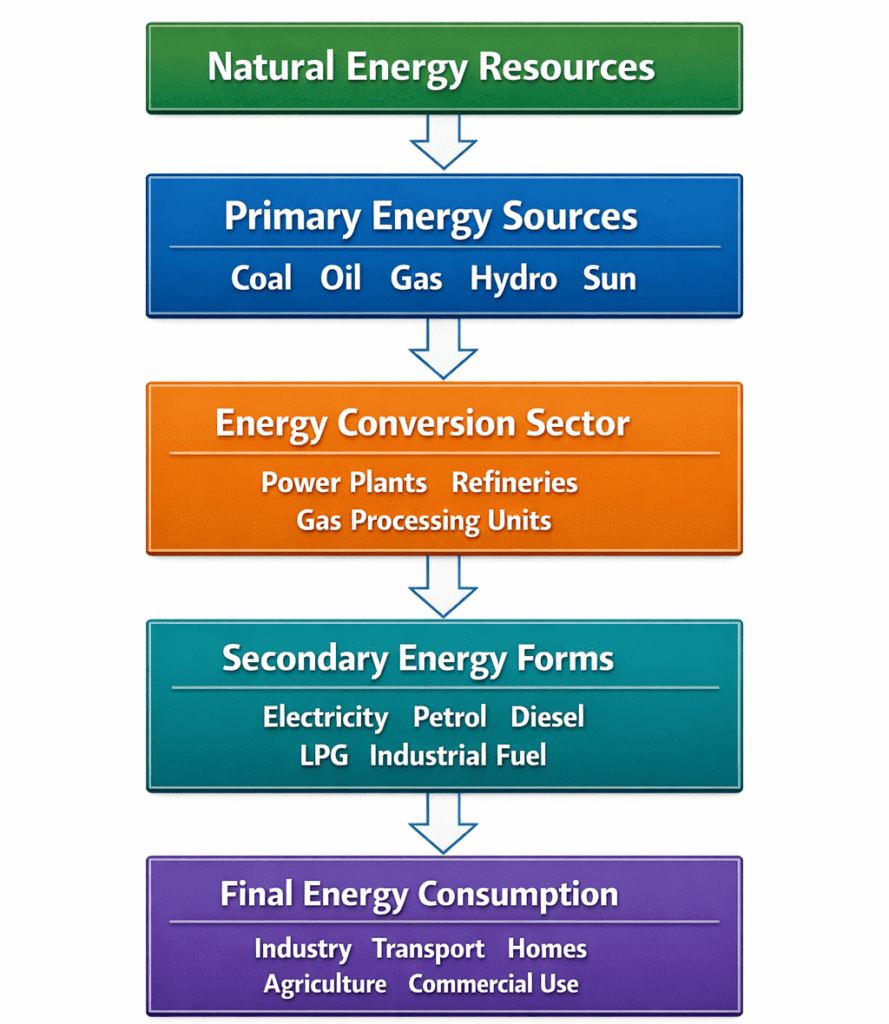
This diagram illustrates how primary energy resources are converted into usable forms of energy and then distributed to different sectors of the economy.
Key Features of India’s Energy Scenario in 2026
Several important trends define the current energy scenario in India.
1. High Dependence on Coal
Coal continues to dominate electricity generation due to its availability and existing infrastructure.
2. Rapid Renewable Energy Expansion
India has become one of the world leaders in solar and wind energy installations.
3. Increasing Energy Demand
Economic growth, digital infrastructure, manufacturing expansion, and electric mobility are increasing energy demand.
4. Oil Import Dependence
India imports a significant portion of crude oil, which creates challenges for energy security.
5. Government Policy Support
Programs and national missions are encouraging clean energy development and energy efficiency.
Challenges in Commercial Energy Production
India still faces several challenges in the energy sector.
• Rising energy demand due to industrial growth
• Dependence on fossil fuels
• High crude oil import bill
• Transmission and distribution losses
• Environmental concerns related to coal usage
Addressing these challenges requires investment in clean energy, improved infrastructure, and efficient energy management.
Opportunities for Future Growth
Despite challenges, India’s energy sector has strong opportunities.
• Expansion of solar and wind energy projects
• Development of green hydrogen technologies
• Smart grid and energy storage systems
• Electrification of transportation
• Improved energy efficiency in industries
These initiatives will help India move toward a sustainable and secure energy future.


