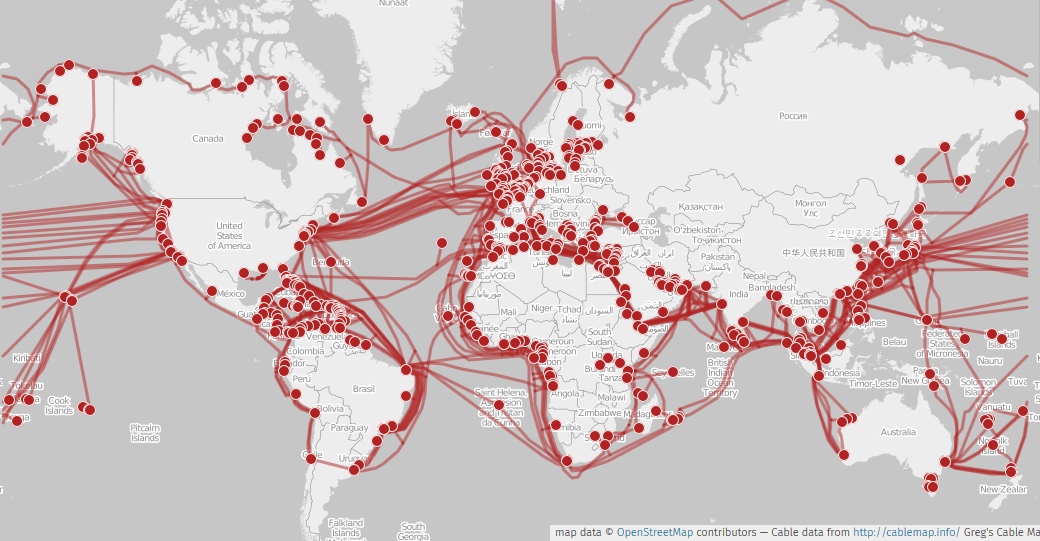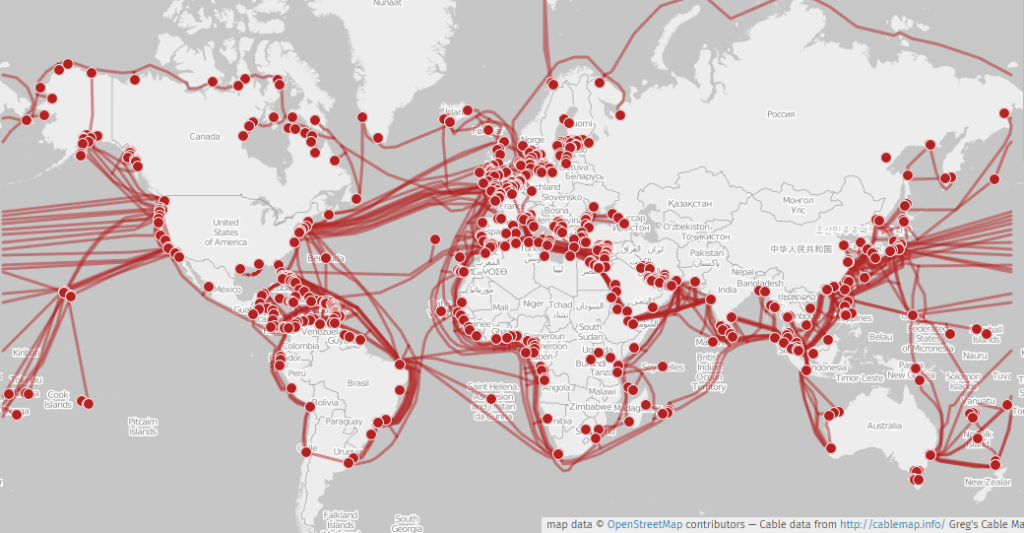
Undersea cables, also called submarine cables, are communication lines laid on the seabed that connect countries and continents. These cables form the backbone of the global internet and international telecommunications system. Whenever you send a message, stream a video, or make an international call, your data often travels through these cables beneath the ocean.
What Are Undersea Cables?
Undersea cables are long, thin cables made primarily of fiber optics. They are designed to transmit data in the form of light signals over very long distances across oceans. These cables connect landing stations in different countries, enabling fast and reliable global communication.
Structure of Undersea Cables
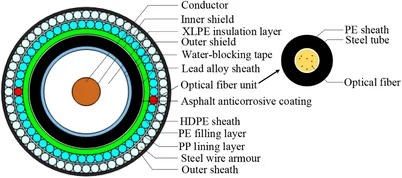
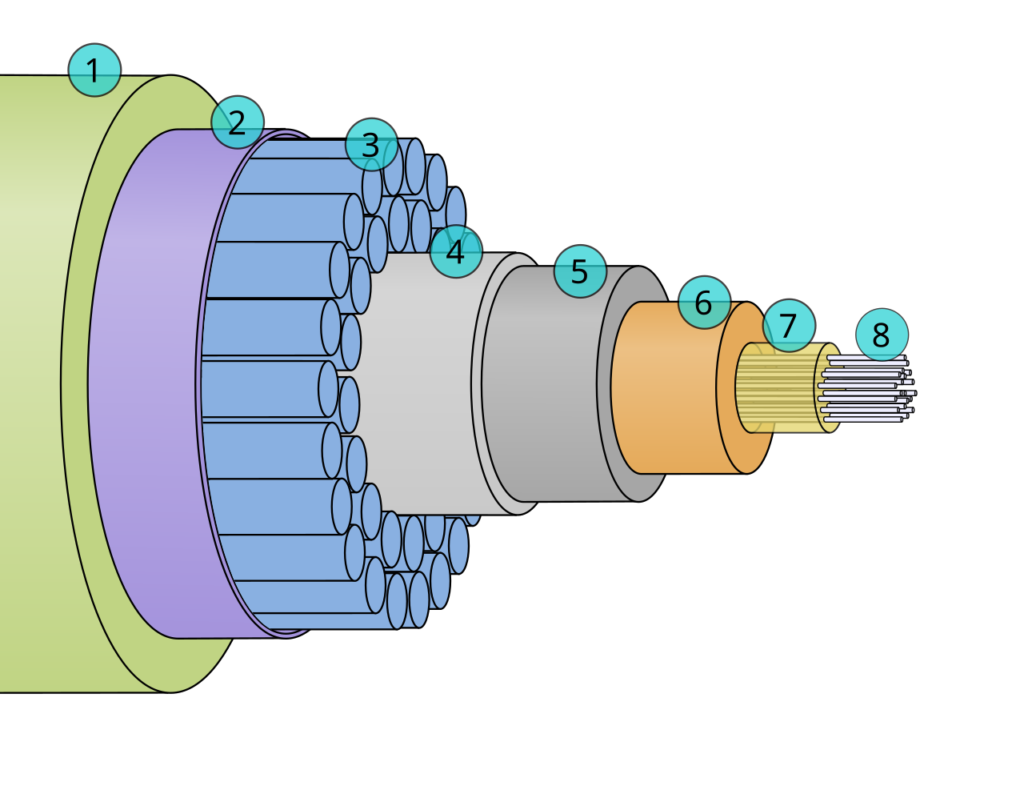
An undersea cable is not just a simple wire. It has multiple protective layers to survive harsh ocean conditions. The main components include:
- Core (Optical Fibers)
Thin strands of glass or plastic that carry data as light signals. - Cladding
Surrounds the fiber and helps in reflecting light back into the core. - Protective Layers
Include plastic coatings, steel wires, and waterproof materials to protect against pressure, corrosion, and physical damage. - Outer Insulation
Provides durability against environmental conditions like saltwater and marine life.
How Undersea Cables Work
Undersea cables use fiber optic technology to transmit data. Information is converted into light pulses and sent through the optical fibers. These signals travel at very high speeds, close to the speed of light.
To maintain signal strength over long distances, repeaters or amplifiers are placed along the cable at intervals. These devices boost the signal so it can travel thousands of kilometers without losing quality.
Importance of Undersea Cables
Undersea cables play a crucial role in modern communication:
- Global Internet Connectivity
Over 95 percent of international data traffic is carried by these cables. - High Speed and Reliability
They provide faster and more stable connections compared to satellites. - Economic Impact
They support global trade, banking systems, and digital services. - International Communication
Enable instant communication between continents.
Installation of Undersea Cables
The installation process is complex and requires specialized ships:
- Surveying the ocean floor to find a safe route
- Designing the cable path
- Laying the cable using cable-laying ships
- Burying cables in shallow waters to protect them from damage
- Connecting cables to landing stations on land
Challenges and Risks
Despite their importance, undersea cables face several challenges:
- Damage from fishing activities and ship anchors
- Natural disasters like earthquakes and underwater landslides
- High cost of installation and maintenance
- Security concerns and accidental cuts