DOWNLOAD LINK BELOW (SONYLIV)👇
What is Wind Turbine?
Wind turbines are devices that convert the kinetic energy of wind into electrical energy. They are widely used in renewable energy systems because wind is clean, sustainable, and freely available. Wind turbines are mainly classified based on the orientation of their axis of rotation and their design structure.
Below are the main types of wind turbines:
1. Horizontal Axis Wind Turbine (HAWT)
2. Vertical Axis Wind Turbine (VAWT)
3. Darrieus Wind Turbine
4. Savonius Wind Turbine
5. Giromill Wind Turbine
1. Horizontal Axis Wind Turbine (HAWT)
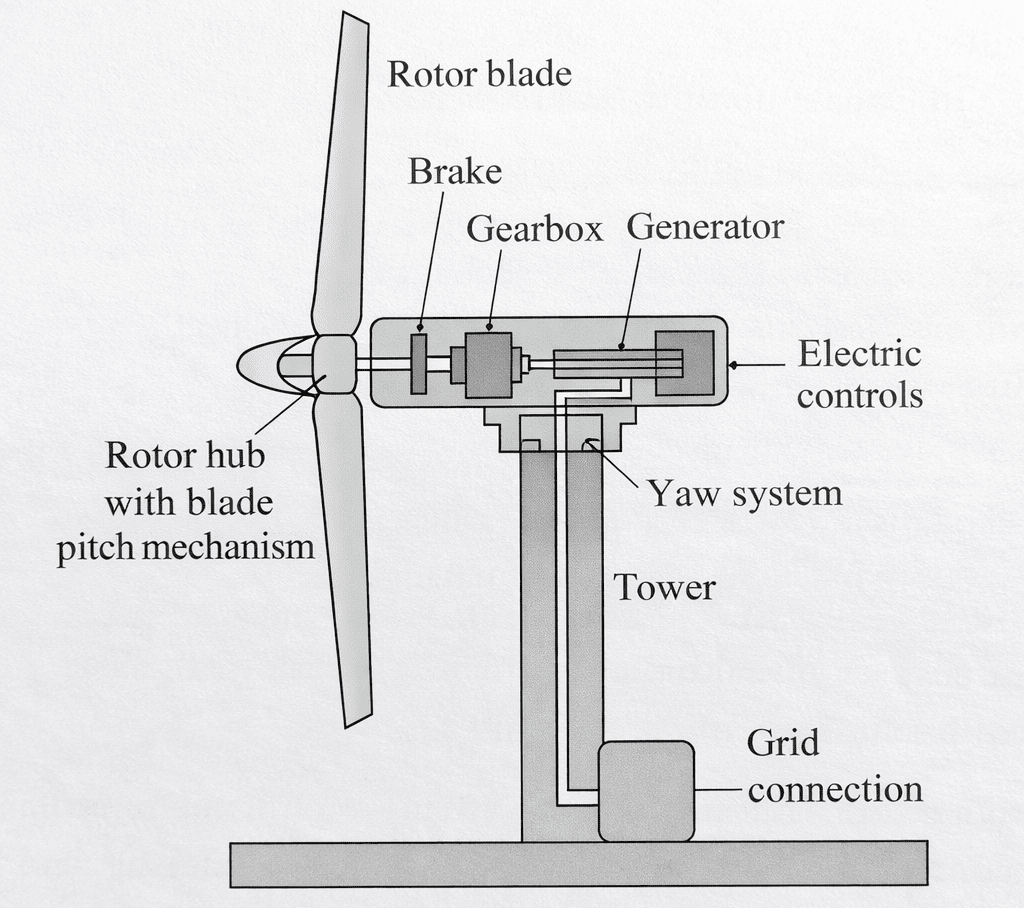
A Horizontal Axis Wind Turbine is the most common type of wind turbine used worldwide. In this design, the rotor shaft and blades rotate around a horizontal axis that is parallel to the ground. These turbines usually have two or three long blades mounted on a tower. The blades face the wind directly and rotate when wind flows across them. The rotor is connected to a generator through a gearbox which converts mechanical energy into electricity. Most commercial wind farms use this type because it offers high efficiency and produces large amounts of power.
Advantages
• High efficiency
• Suitable for large scale power generation
• Mature and widely used technology
Disadvantages
• Requires tall towers
• Needs a yaw mechanism to face the wind
• Installation cost is high
2. Vertical Axis Wind Turbine (VAWT)
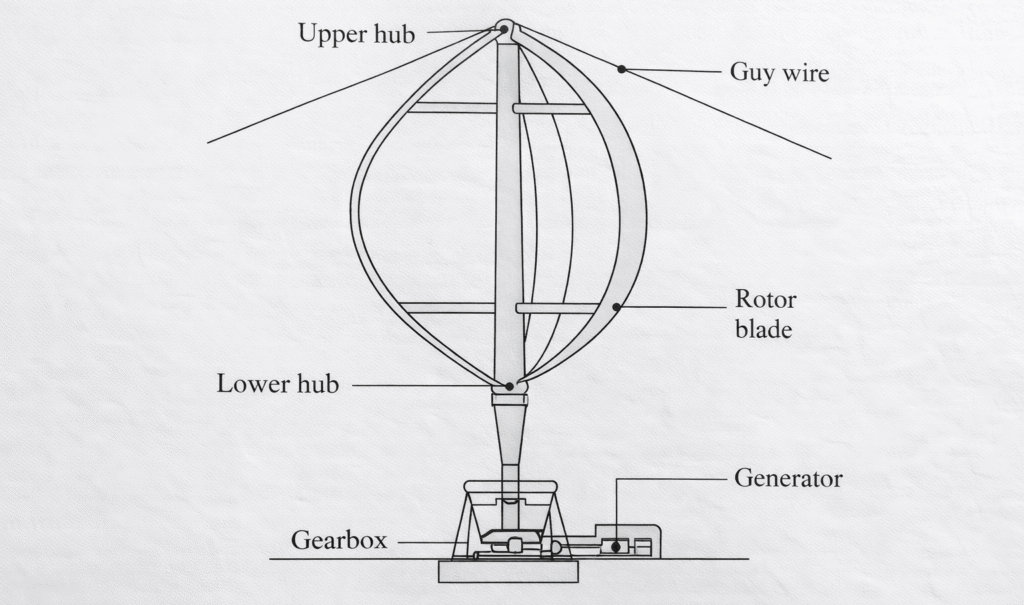
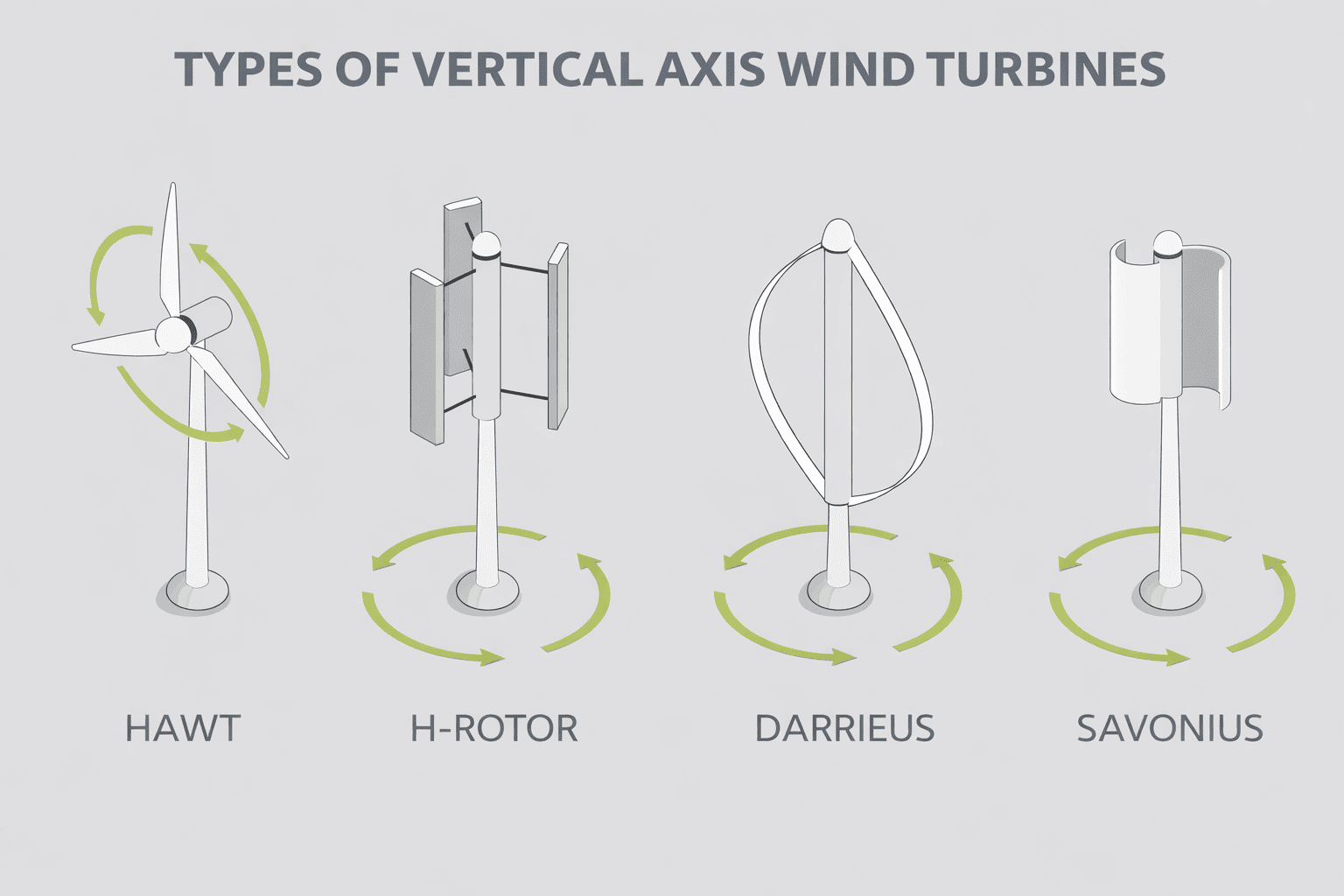
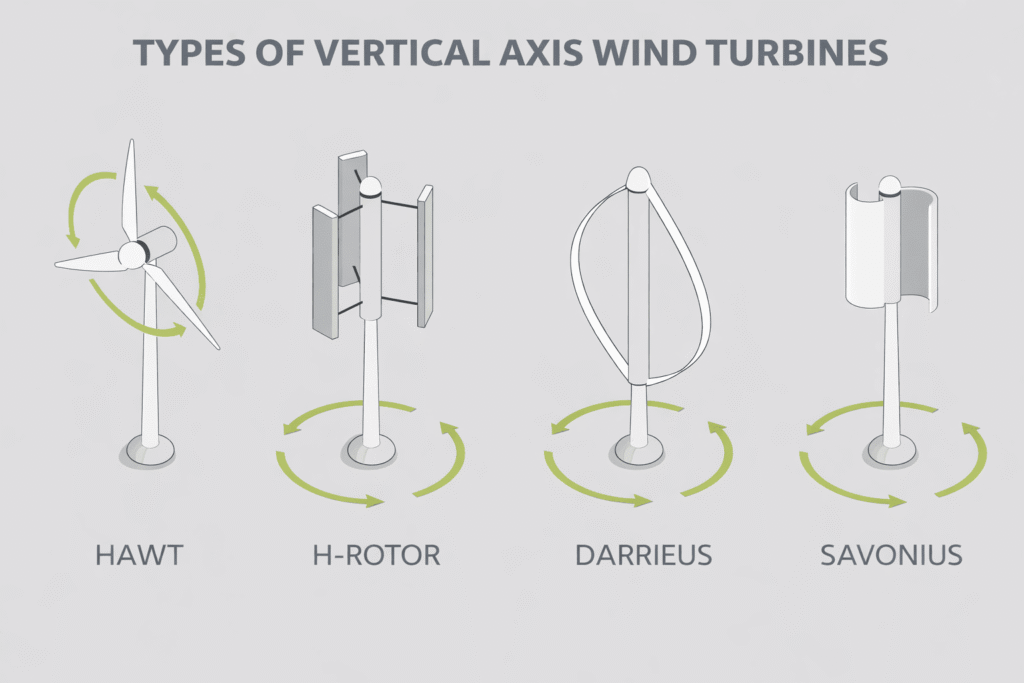
A Vertical Axis Wind Turbine has blades that rotate around a vertical shaft. The axis of rotation is perpendicular to the ground. Unlike horizontal turbines, these turbines do not need to face the wind. They can capture wind from any direction, which makes them suitable for urban areas where wind direction changes frequently. These turbines are generally installed at lower heights and are easier to maintain because major components are located near the ground.
Advantages
• Works in any wind direction
• Easy maintenance
• Suitable for small scale and urban installations
Disadvantages
• Lower efficiency compared to horizontal turbines
• Not suitable for large power generation
3. Darrieus Wind Turbine
The Darrieus wind turbine is a type of vertical axis wind turbine. It has curved blades that form a shape similar to an eggbeater. This turbine operates based on aerodynamic lift produced by the blades when wind passes over them. It can achieve relatively high efficiency compared with other vertical axis turbines. However, it cannot start rotating on its own and usually requires an external motor to start the rotation.
Key Features
• Curved blade structure
• Higher efficiency among VAWTs
• Requires external starting mechanism
4. Savonius Wind Turbine
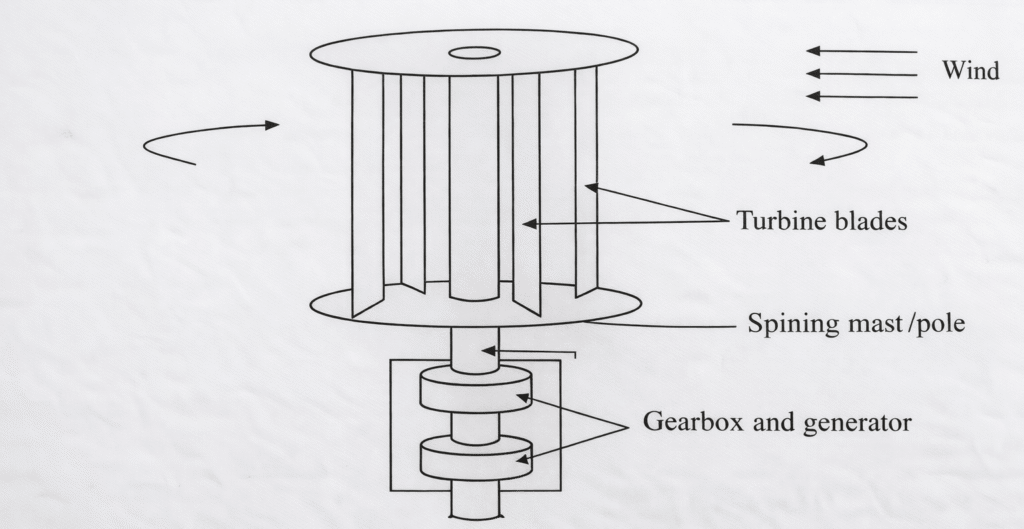
The Savonius wind turbine is another type of vertical axis turbine. It has an S shaped rotor made from two or more curved blades. It works on the principle of drag force. Wind pushes the blades causing the rotor to spin. This design is very simple and can start rotating even at low wind speeds. Savonius turbines are commonly used for small applications such as ventilation systems, water pumping, and small power generation.
Advantages
• Simple design
• Self starting
• Works in low wind speeds
Disadvantages
• Low efficiency
• Not suitable for large scale electricity generation
5. Giromill Wind Turbine
The Giromill wind turbine is a modified version of the Darrieus turbine. Instead of curved blades, it uses straight vertical blades connected to the central shaft. This design is easier to manufacture and maintain. It also performs better in turbulent wind conditions compared with other vertical axis turbines. However, similar to the Darrieus turbine, it may require external assistance to start rotating.