How to convert Single Phase into Three Phase
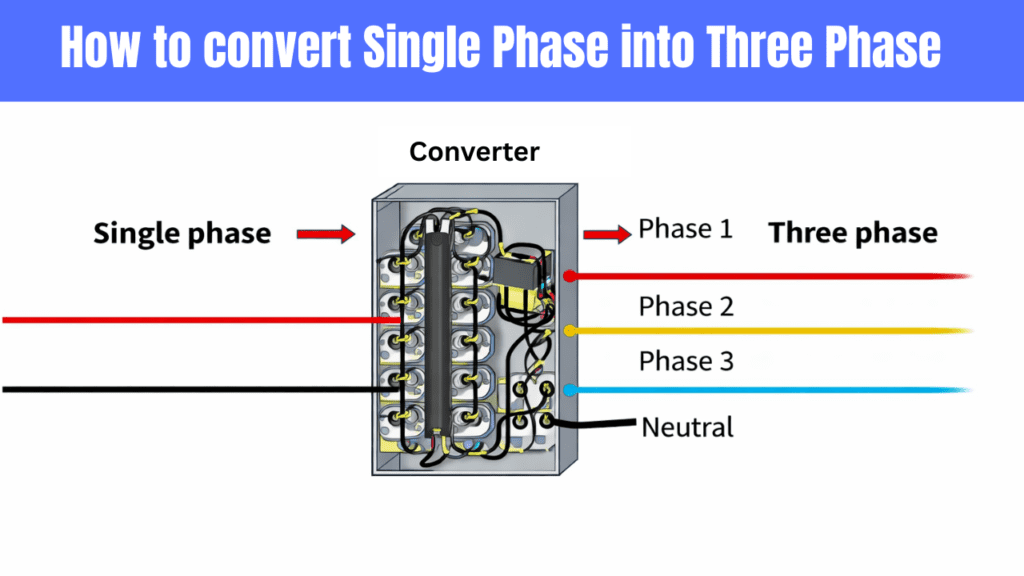
In many homes and small workshops, only single phase power supply is available. However, most industrial machines, motors, and heavy loads require three phase power because it is more efficient, smoother, and capable of delivering higher power. This creates a common question in electrical engineering and practical installations. How can single phase power be converted into three phase?
Before moving ahead, it is important to understand one key point. Single phase cannot be directly converted into a true utility grade three phase supply without using special equipment. What we actually do is generate an artificial or synthesized three phase supply using electrical and electronic methods.
Why Three Phase Supply Is Needed
Three phase power is preferred because it provides constant power transfer, better motor performance, higher efficiency, and reduced losses. Three phase motors start smoothly, have better torque, and require less conductor material for the same power rating when compared to single phase systems.
1. Rotary Phase Converter
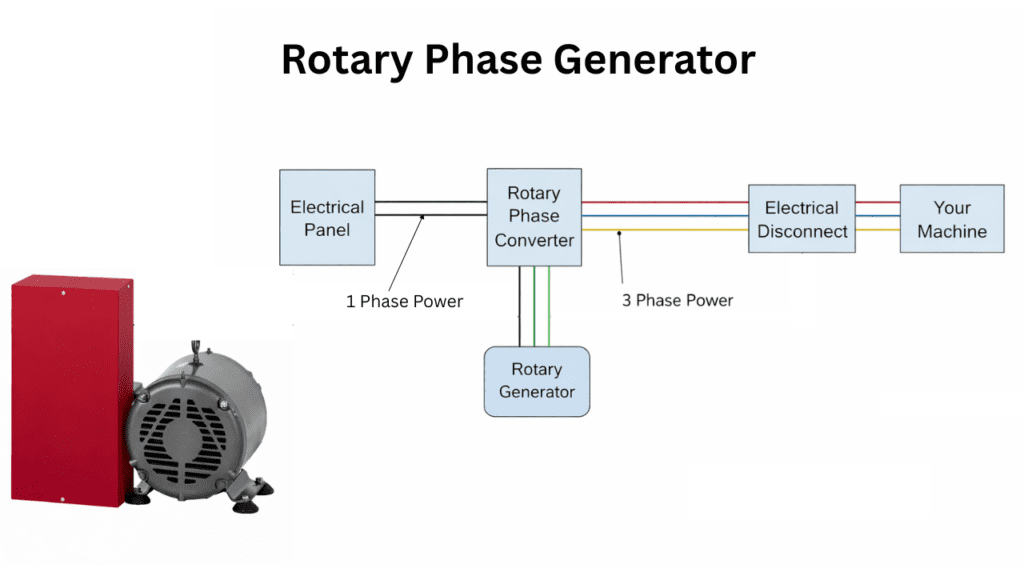
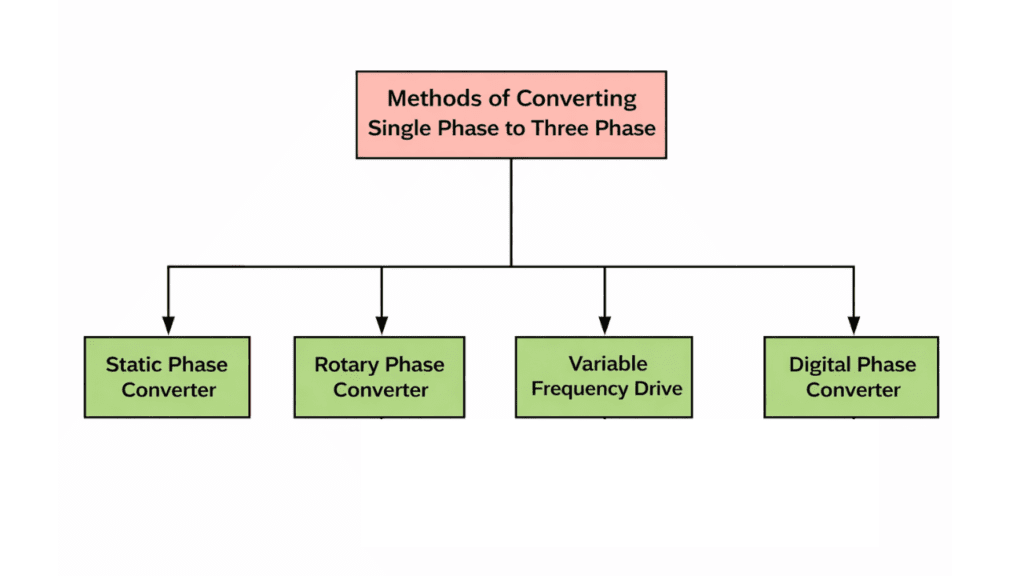
A rotary phase converter uses a three phase induction motor called an idler motor. Single phase supply is connected to the idler motor, which then generates the third phase due to rotating magnetic fields.
Working principle is simple. Single phase energizes two windings, the motor starts rotating, and the third winding generates the missing phase. This method is commonly used in workshops and small industries.
Advantages include simplicity and ability to handle heavy loads. Disadvantages are noise, mechanical losses, and lower efficiency.
Advantages:
• Can handle large motor loads.
• Provides true three phase power.
Disadvantages:
• Larger and noisier than other methods.
• Requires regular maintenance.
Typical Applications:
• Machine shops, heavy machinery
2. Static Phase Converter
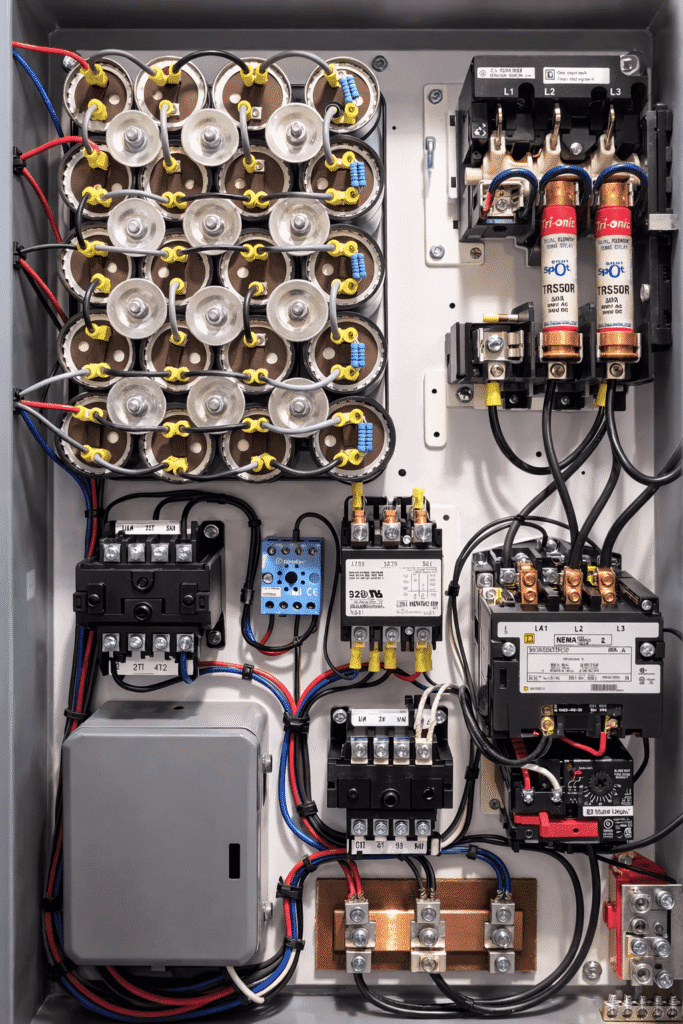
A static phase converter uses capacitors to create a phase shift and start a three phase motor on single phase supply. Once the motor reaches speed, it continues running on an unbalanced three phase system.
This method is cheaper and simpler than rotary converters but provides reduced motor power. Typically only 60 to 70 percent of rated motor power is available. Static converters are suitable for light loads where full torque is not required.
Advantages:
• Less expensive than rotary converters.
• Simpler to install.
Disadvantages:
• Not ideal for continuous operation or high power loads.
• Reduced motor performance and efficiency.
Typical Applications:
• Light machinery, small shops.
3. Variable Frequency Drive (VFD)
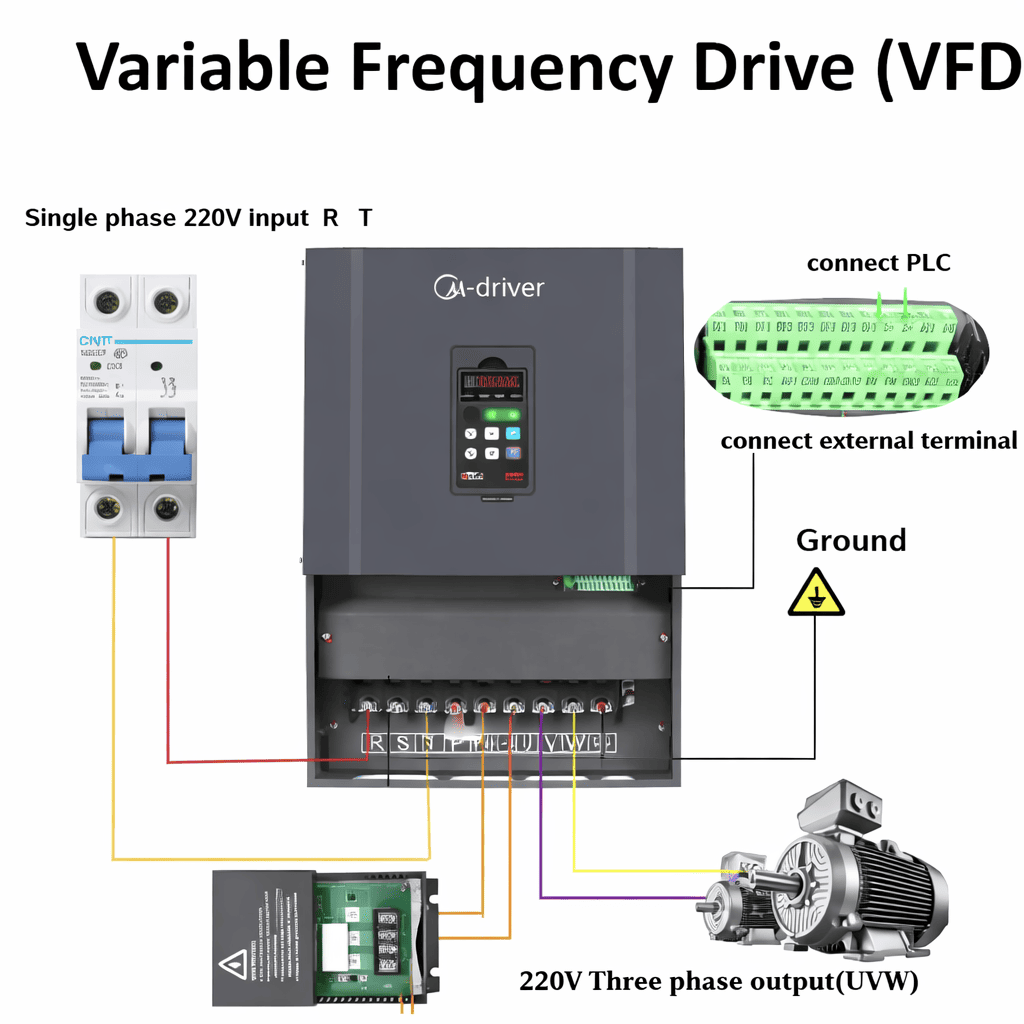
A VFD can be used as a practical solution to convert single phase supply into three phase output for running a three phase motor. This method is very common in small industries, workshops, and labs where three phase utility supply is not available.
Basic idea
- Single phase AC is fed to the VFD input.
- Inside the VFD, the supply is converted to DC.
- The inverter section then generates a balanced three phase AC output.
- The motor receives U V W terminals just like a normal three phase supply.
So the VFD acts as both a phase converter and a speed controller.
How it works internally
- Rectifier converts single phase AC to DC
- DC bus smooths the voltage using capacitors
- Inverter uses IGBTs to create three phase AC with adjustable frequency and voltage
- Because frequency is controllable, motor speed can also be controlled easily.
4. Digital Phase Converter
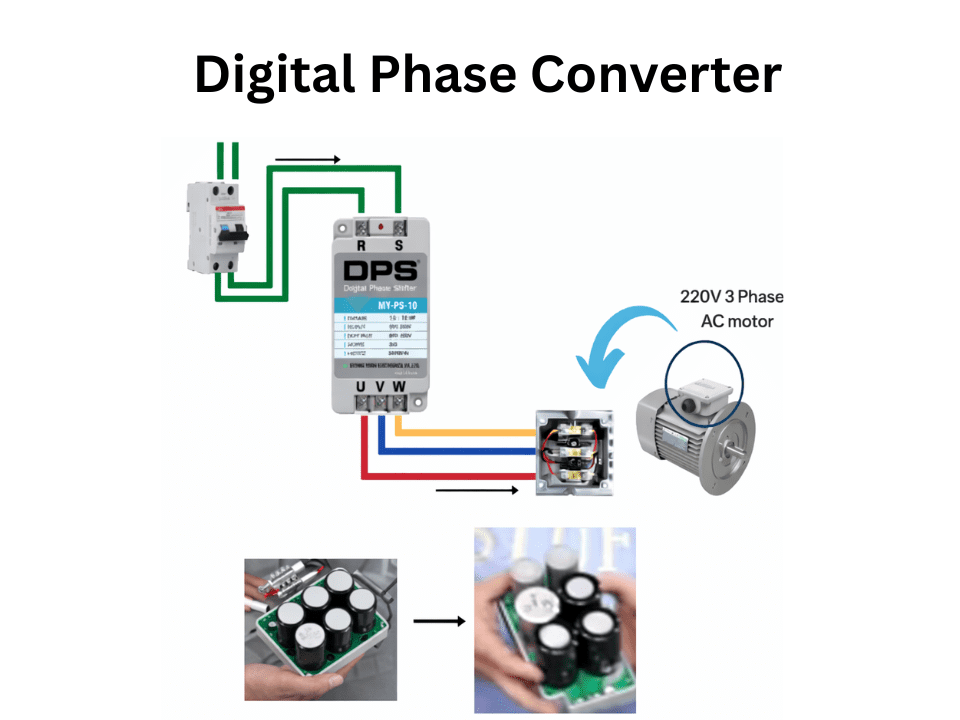
A digital phase converter is an electronic device used to run a three phase motor when only single phase power is available. It creates an artificial third phase using power electronics and a capacitor bank, so the motor can operate smoothly.
How it works
- Single phase supply is given to the converter.
- The internal control circuit and capacitor bank generate a phase shifted output.
- This output, along with the original supply, forms a three phase like system.
- The motor receives U V W terminals and starts like a normal three phase motor.
Advantages:
• Efficient and reliable.
• Provides balanced three phase power.
Disadvantages:
• Expensive.
• Limited to specific applications.
Typical Applications:
• CNC machines, precision equipment.
Important Safety and Practical Points
Never attempt to directly split a single phase line into three wires and call it three phase. This is electrically incorrect and dangerous. Always use certified equipment designed for phase conversion. Proper earthing, protection devices, and load matching are essential for safe operation.