What is a FACTS Controller?
Flexible AC Transmission Systems, commonly called FACTS, are advanced power electronic based devices used in modern power systems to improve controllability, stability, and power transfer capability of AC transmission networks.
A FACTS controller regulates key electrical parameters such as voltage, impedance, and phase angle of transmission lines. By doing this, it helps utilities transmit more power through existing lines without building new infrastructure, which saves both cost and time.
In simple terms, FACTS devices make power systems smarter, faster, and more efficient.
Why FACTS Controllers are Important
Power demand is increasing rapidly, but expanding transmission networks is expensive and complex. FACTS controllers solve this problem by optimizing the existing system.
Some key benefits include:
- Improved voltage stability
- Increased power transfer capability
- Better control of power flow
- Reduced transmission losses
- Enhanced system reliability
- Damping of power oscillations
Types of FACTS Controllers
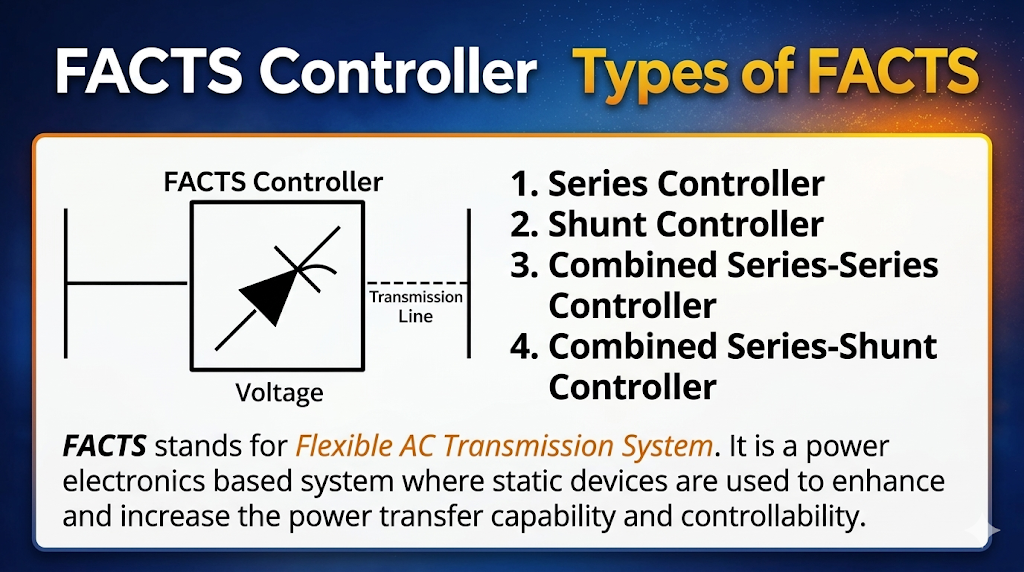
FACTS controllers are mainly classified into four categories based on how they are connected in the system.
- Series Controller
- Shunt Controller
- Combined Series-Series Controller
- Combined Series-Shunt Controller
Series Controller
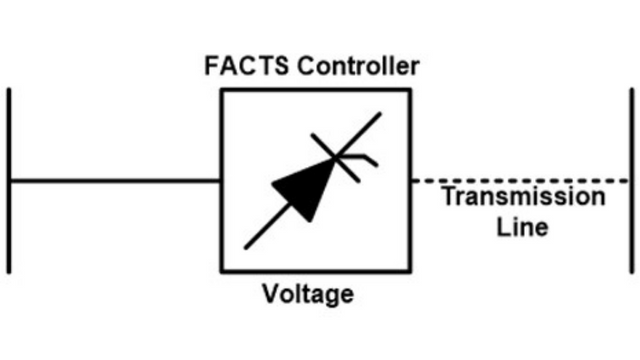
A Series FACTS Controller is a device connected in series with a transmission line to control the flow of electrical power. It mainly works by changing the line impedance, which directly affects how much power flows through the line.
In AC transmission, power flow depends on line reactance. Series controllers modify this reactance.
- If reactance decreases → power flow increases
- If reactance increases → power flow decreases
These controllers inject a controlled voltage in series with the transmission line. This injected voltage can be adjusted in magnitude and phase to control power flow precisely.
Types of Series Controllers: TCSC, SSSC
Shunt Controller
A Shunt FACTS Controller is connected in parallel with the transmission line. Its main purpose is to control voltage by injecting or absorbing reactive power.
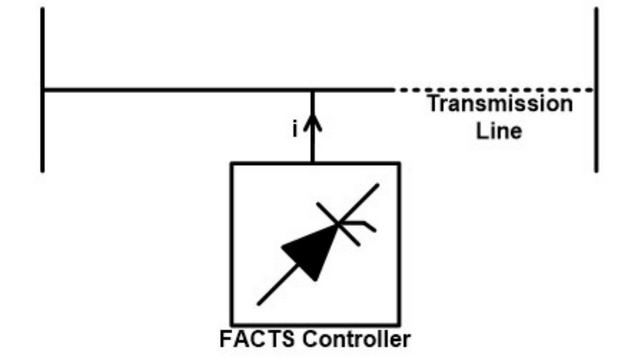
Voltage in a power system depends heavily on reactive power.
- If voltage drops → controller injects reactive power
- If voltage rises → controller absorbs reactive power
This keeps the system voltage stable and within safe limits.
The controller continuously monitors system voltage and adjusts its output instantly using power electronic devices.
Types of Shunt Controllers: SVC, STATCOM
Combined Series-Series Controller
A Combined Series–Series FACTS Controller is a system where multiple series controllers are connected to different transmission lines and operate together in a coordinated way.
The most common example is: IPFC (Interline Power Flow Controller)
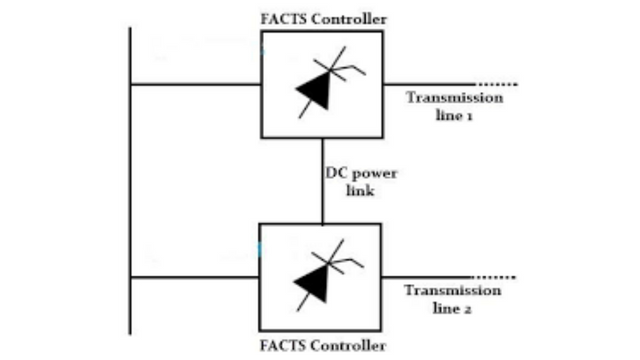
In this system, each transmission line has its own series controller, and all controllers are connected through a common DC link.
This allows power exchange between lines.
- Power can be transferred from a lightly loaded line to an overloaded line
- Voltage injected in each line is controlled independently
- Real power flows through the DC link between converters
So instead of controlling one line, it controls multiple lines at the same time.
Combined Series-Shunt Controller
A Combined Series–Shunt FACTS Controller uses both series and shunt compensation together in one system.
The most important example is: UPFC (Unified Power Flow Controller)
It is the most advanced FACTS device, capable of controlling multiple parameters at the same time.
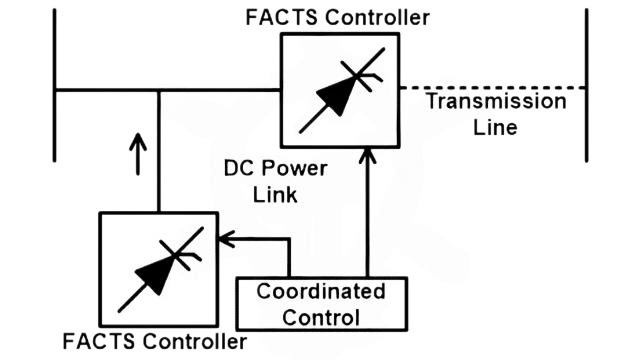
A UPFC consists of two converters:
1. Shunt Converter
- Connected in parallel with the transmission line
- Maintains bus voltage
- Supplies or absorbs reactive power
- Also provides real power to the DC link
2. Series Converter
- Connected in series with the transmission line
- Injects controllable voltage
- Controls magnitude and direction of power flow
Both converters are connected through a common DC link capacitor, which allows exchange of real power between them.
A UPFC can simultaneously control:
- Voltage (V)
- Line impedance (X)
- Phase angle (δ)
This leads to control over:
- Real power (P)
- Reactive power (Q)