
What is a Distributed Energy Sources?
Distributed Energy Sources (DES) refer to small-scale power generation units installed close to the load centers. Unlike traditional centralized generation, distributed generation improves reliability, reduces losses and supports renewable energy integration.
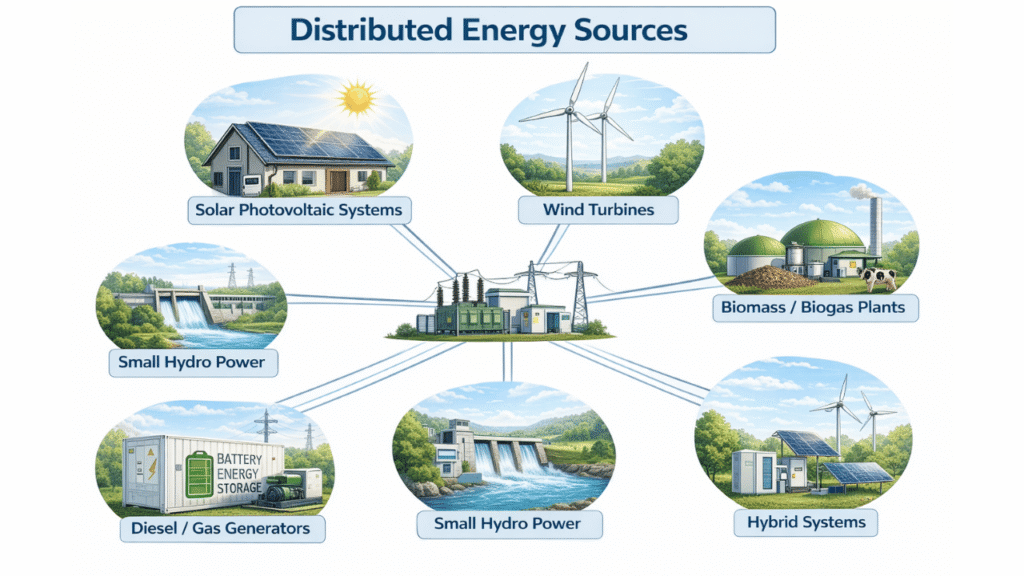
Types of Distributed Energy Sources
- Solar photovoltaic systems
- Wind turbines
- Biomass and biogas plants
- Small hydro power
- Diesel and gas generators
- Battery energy storage systems
- Hybrid systems
Solar Photovoltaic Systems
Solar photovoltaic systems generate electricity by directly converting sunlight into electrical energy using semiconductor solar cells. The DC output from the panels is converted into AC using inverters before supplying the load or grid. These systems are clean, silent, and require no fuel, making them environmentally friendly. They are widely used in rooftop installations and solar farms. However, their output depends on sunlight availability and requires energy storage for continuous supply.
Applications:
Rooftop systems, solar parks, rural electrification, commercial buildings
Advantages:
- Zero emissions
- Low maintenance
- Modular and scalable
Limitations:
- Intermittent generation
- Requires energy storage for night use
Wind Turbines
Wind turbines convert the kinetic energy of wind into electrical energy through rotating blades connected to a generator. They are suitable for locations with consistent wind speed such as coastal and open rural areas. Wind energy is renewable and has low operating costs after installation. These systems contribute significantly to clean energy generation. Their performance varies with wind conditions and requires large open spaces for installation.
Applications:
Rural areas, coastal regions, wind farms
Advantages:
- Renewable and eco-friendly
- Low operating cost
Limitations:
- Dependent on wind speed
- Noise and space requirements
Biomass and Biogas Plants
Biomass and biogas plants generate electricity by using organic materials such as agricultural waste, animal waste, and plant residues. In biomass plants, fuel is burned to produce steam for turbines, while biogas plants use methane gas from anaerobic digestion to run engines. These systems help in waste management and provide continuous power generation. They are commonly used in rural and agro-industrial areas. Fuel collection and emission control are important challenges.
Applications:
Rural areas, sugar mills, food processing units
Advantages:
- Waste management solution
- Reliable base-load generation
Limitations:
- Fuel collection and transport issues
- Emissions if not properly controlled
Small Hydro Power Plants
Small hydro power plants generate electricity using the energy of flowing water from rivers, canals, or streams. They offer high efficiency and reliable continuous power generation. These plants have long operational life and low maintenance requirements. They are ideal for hilly and remote regions with available water resources. However, their output depends on water availability and seasonal variations.
Applications:
Hilly areas, remote villages, irrigation canals
Advantages:
- Long life and reliable
- Low operating cost
Limitations:
- Site dependent
- Seasonal water variation
Diesel and Gas Generators
Diesel and gas generators produce electricity by running internal combustion engines coupled with alternators. They are commonly used as standby and emergency power sources in hospitals, industries, and telecom systems. These generators provide quick starting and reliable operation. They are suitable for peak load support and backup supply. However, they involve high fuel costs, noise, and environmental pollution.
Applications:
Hospitals, industries, telecom towers, emergency systems
Advantages:
- Reliable and controllable
- Suitable for peak load support
Limitations:
- High fuel cost
- Noise and air pollution
Battery Energy Storage Systems
Battery energy storage systems store electrical energy and supply it during peak demand or power interruptions. They play an important role in supporting renewable energy integration and improving grid stability. These systems provide fast response and accurate power control. They are widely used in micro-grids and solar plants. High initial cost and limited battery life are their main limitations.
Applications:
Solar plants, micro-grids, electric vehicle charging stations
Advantages:
- Fast response time
- Improves grid stability
Limitations:
- High initial cost
- Limited lifetime
Hybrid Systems
Hybrid systems combine two or more energy sources such as solar, wind, diesel, and batteries to ensure continuous power supply. They improve reliability by compensating for the limitations of individual sources. These systems reduce fuel consumption and enhance overall efficiency. Hybrid systems are widely used in remote areas and isolated grids. Their design requires advanced control and proper system coordination.
Examples:
- Solar + Battery
- Wind + Diesel
- Solar + Wind + Storage
Applications:
Isolated areas, islands, military bases, smart grids
Advantages:
- Continuous power supply
- Better efficiency and sustainability
Limitations:
- Higher system complexity
- Requires advanced control systems
| Type | Main Source | Key Use |
|---|---|---|
| Solar PV | Sunlight | Rooftop, commercial, rural |
| Wind | Wind energy | Coastal, rural areas |
| Biomass / Biogas | Organic waste | Rural, agro-industries |
| Small Hydro | Flowing water | Hilly and canal regions |
| Diesel / Gas | Fossil fuel | Backup and emergency |
| Battery Storage | Stored electricity | Grid support, renewables |
| Hybrid | Multiple sources | Remote and smart systems |
Comparison: Centralized Generation vs Distributed Generation
| Basis | Centralized Generation | Distributed Generation |
|---|---|---|
| Location | Far from load centers | Near or at load centers |
| Plant Size | Very large power plants | Small to medium units |
| Voltage Level | High voltage transmission (132–765 kV) | Low / medium voltage (400 V – 33 kV) |
| Transmission Losses | High | Very low |
| Reliability | Dependent on grid stability | High local reliability |
| Control | Centralized control | Decentralized / local control |
| Installation Time | Long construction period | Short installation time |
| Renewable Integration | Difficult and complex | Easy and flexible |
| Environmental Impact | Higher emissions | Lower emissions (renewable based) |
| Flexibility | Low | High |
| Typical Examples | Thermal, hydro, nuclear plants | Solar PV, wind, diesel, batteries |