Petrol pump machines, commonly called fuel dispensers, are an important part of modern transportation infrastructure. Every time a vehicle stops at a fuel station, a sophisticated system operates behind the scenes to deliver fuel accurately and safely. Although refueling appears to be a simple process, the machine responsible for it contains a combination of mechanical components, electronic systems, and precision measuring devices.
These machines are designed to transfer fuel from underground storage tanks to vehicles while calculating the exact quantity of fuel dispensed. The process must be extremely accurate because even a small error in measurement could lead to incorrect billing or fuel loss. For this reason, fuel dispensers are built using advanced technology and are regularly calibrated to maintain precision.
Main Components of a Petrol Pump System
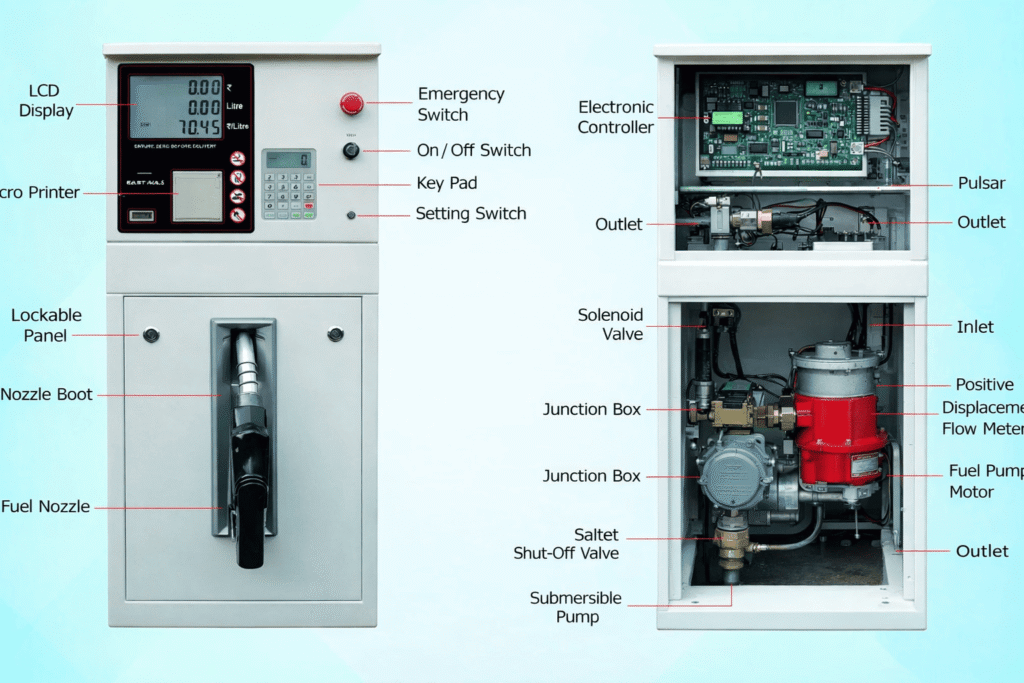
A petrol pump machine contains several key components that allow it to deliver fuel safely and accurately. Each part has a specific role in the dispensing process.
The underground storage tank is where petrol or diesel is stored before being dispensed. These tanks are designed to safely hold large volumes of fuel while preventing leaks or environmental contamination.
The submersible pump pushes fuel from the underground tank through pipelines toward the dispenser. This pump creates the pressure needed to move fuel efficiently through the system.
The fuel filter removes impurities such as dust, rust particles, and other contaminants from the fuel before it reaches the vehicle.
The flow meter is one of the most important parts of the dispenser. It measures the exact quantity of fuel passing through the system.
The electronic controller processes signals from the flow meter and sensors. It calculates the fuel quantity and updates the digital display in real time.
Finally, the hose and nozzle deliver fuel directly into the vehicle’s fuel tank. Modern nozzles also include automatic shutoff mechanisms that stop fuel flow when the tank becomes full.
Petrol Pump Working Diagram
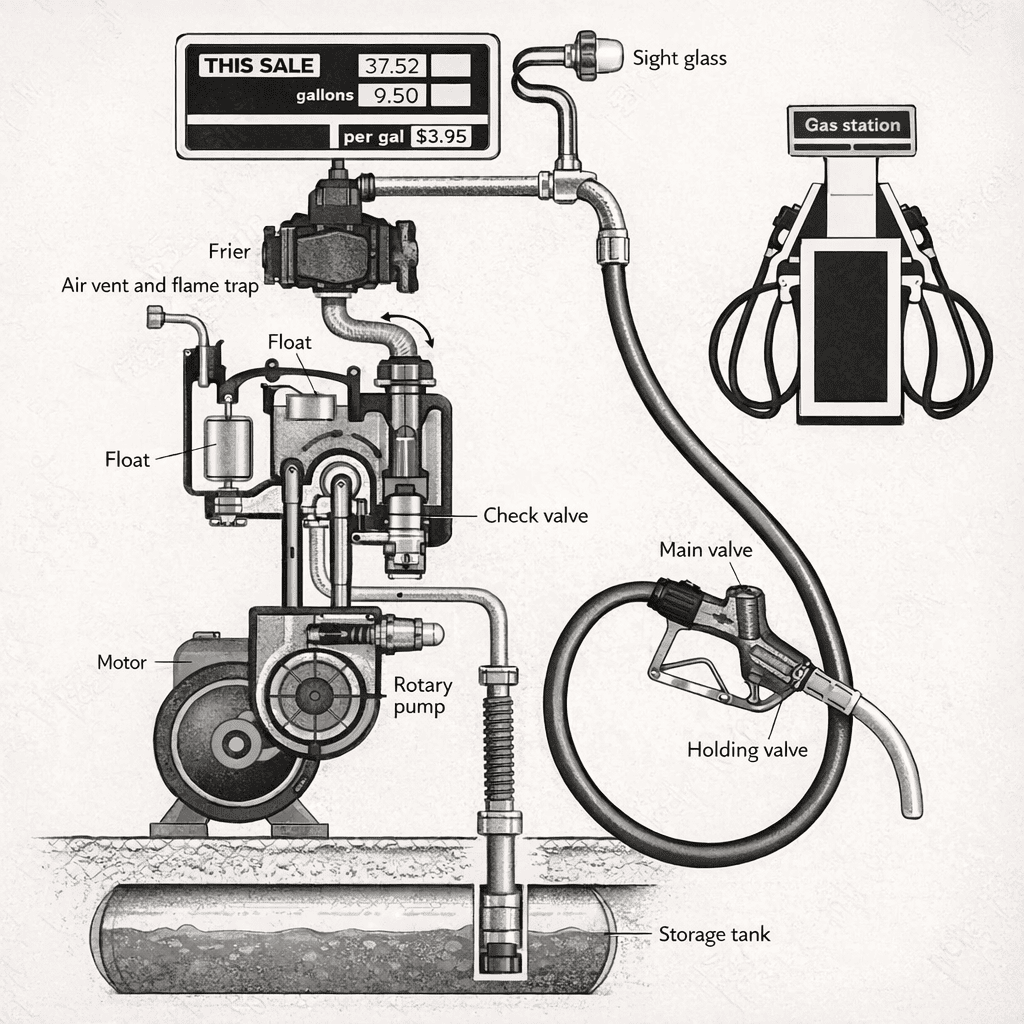
The diagram shows how fuel moves from the underground storage tank to the vehicle through the petrol pump system. It illustrates different mechanical components that help pump, control, measure, and deliver fuel safely.
Storage Tank
The storage tank is located underground and stores large quantities of petrol or diesel. Fuel stations keep fuel in these tanks so it can be supplied to vehicles whenever needed. The tank protects fuel from contamination and temperature changes.
Motor and Rotary Pump
The motor drives the rotary pump which pulls fuel from the underground tank. The pump creates suction that moves the fuel upward through the pipeline. This process allows fuel to flow continuously toward the dispenser.
Float and Air Vent System
The float chamber removes air from the fuel before it reaches the meter. If air bubbles enter the fuel line, they can affect measurement accuracy. The float mechanism helps maintain a stable fuel level inside the chamber.
Check Valve
The check valve controls the direction of fuel flow. It allows fuel to move forward toward the dispenser but prevents it from flowing back into the tank. This helps maintain pressure in the pipeline.
Fuel Meter
The fuel meter measures the exact quantity of fuel flowing through the system. Inside the meter, mechanical components rotate as fuel passes through. These movements are converted into measurement signals used to calculate the amount of fuel delivered.
Sight Glass
The sight glass allows operators to visually check the fuel flow. It helps confirm that fuel is moving properly through the pipeline and that there are no air bubbles in the system.
Main Valve
The main valve regulates the fuel supply going to the hose. When fueling begins, the valve opens to allow fuel flow. When fueling stops, the valve closes and stops the supply.
Hose and Nozzle
The hose carries fuel from the dispenser to the nozzle. The nozzle is inserted into the vehicle’s fuel tank and delivers the fuel. Modern nozzles include an automatic shut-off system that stops fuel flow when the tank becomes full.
Display Unit
The display unit shows the fuel quantity, price per litre, and total cost. The readings change continuously as fuel flows through the meter.
Overall Working
In simple terms, fuel is stored in the underground tank, pumped upward by the motor-driven pump, measured by the fuel meter, and delivered through the hose and nozzle into the vehicle. Each component in the system ensures safe and accurate fuel dispensing.
How Petrol Pumps Compute Fuel
Fuel dispensers use a precise measurement system to calculate how much fuel is delivered to the vehicle. The heart of this system is the flow meter, which measures the volume of fuel moving through the dispenser.
As fuel flows through the meter, internal mechanical components such as pistons or rotors rotate in response to the fuel movement. Each rotation corresponds to a specific volume of fuel. Sensors detect this movement and convert it into electrical signals.
These signals are sent to the electronic controller, which calculates the total quantity of fuel dispensed. The system then displays the fuel volume and price on the digital screen in real time.
Because this process happens continuously while fuel flows, the display numbers increase rapidly during refueling.
Why Customers Are Asked to Watch the Meter
At many petrol stations, operators ask customers to watch the display before fueling begins. This is done to ensure transparency and confirm that the meter starts from zero.
Once the fueling process starts, the numbers on the display increase quickly as the system continuously measures fuel flow and calculates the total cost. Since the numbers change rapidly, customers sometimes find it difficult to track them closely.
Regular calibration and inspection of fuel dispensers help maintain accuracy and prevent measurement errors. These checks ensure that customers receive exactly the amount of fuel they pay for.
Accuracy and Calibration of Fuel Pumps
Fuel measurement must follow strict standards. Governments and regulatory authorities require petrol pumps to be calibrated regularly to maintain correct readings.
Calibration involves checking the fuel meter against certified measuring containers and adjusting the system if any deviation is found. Modern fuel dispensers also include temperature compensation systems and advanced sensors that help maintain measurement accuracy.
Because of these strict regulations, fuel pumps are designed to deliver fuel with a very high level of precision.