Electric vehicles are no longer just a mode of transport. They are slowly becoming an important part of the power system. Two key concepts behind this change are V2G and G2V technology. These ideas connect electric vehicles with the grid in a smart and flexible way.
What is G2V Technology
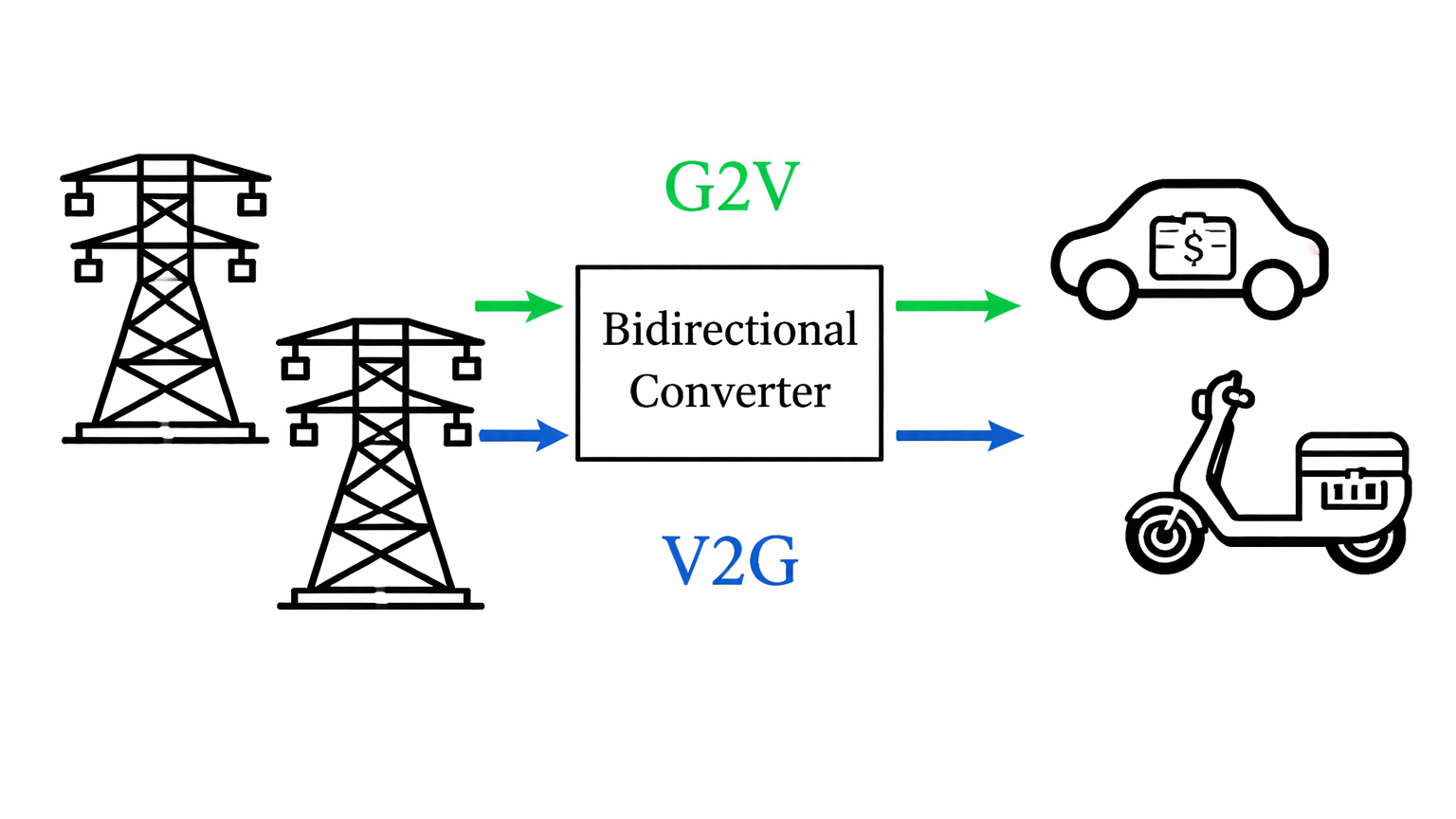
G2V stands for Grid to Vehicle. In this system, electrical energy flows from the power grid to the electric vehicle for charging. This is the most common method used today.
When you plug your EV into a charging point, the grid supplies power to the battery. Charging can be done at home, office, or public charging stations. With smart charging systems, the vehicle can charge during off peak hours when electricity demand is low. This reduces stress on the grid and lowers charging cost.
G2V technology becomes more powerful when combined with smart grids. The charging process can be controlled based on grid conditions, electricity price, and renewable energy availability. For example, if solar generation is high during the afternoon, EVs can be programmed to charge at that time.
What is V2G Technology
V2G stands for Vehicle to Grid. In this system, power flows from the electric vehicle battery back to the grid. For this to work, a bidirectional charger is required.
In V2G, the EV acts like a small energy storage unit. When the grid demand is high, the vehicle can send stored energy back to the grid. When demand is low, it charges again. This two way flow helps in balancing supply and demand.
V2G is especially useful when renewable energy sources like solar and wind are connected to the grid. These sources are not constant. When wind speed drops or sunlight reduces, stored energy from EVs can support the grid.
Objectives of V2G and G2V Technology
- To reduce peak load on the power grid by supplying stored battery energy during high demand.
- To support renewable energy by storing excess solar and wind power in EV batteries.
- To improve grid stability by providing frequency and voltage regulation.
- To maintain balance between electricity generation and demand through controlled charging and discharging.
- To enhance overall energy efficiency through smart charging strategies.
- To provide economic benefits to EV owners by enabling energy trading.
- To promote development of smart grid infrastructure using advanced communication systems.
- To reduce carbon emissions by decreasing reliance on fossil fuel based power generation.
How does V2G and G2V Technology Works
In G2V, AC power from the grid is converted into DC using a charger. This DC power charges the EV battery. The process is controlled by a battery management system to ensure safe charging.
In V2G, the stored DC power in the battery is converted back into AC using an inverter inside the bidirectional charger. This AC power is then synchronized with grid frequency and voltage before feeding it back.
Proper communication between the vehicle, charger, and grid operator is required. Advanced control algorithms ensure that battery health is maintained and user requirements are not disturbed.
Advantages of V2G and G2V
- Better grid stability
- Efficient use of renewable energy
- Reduced peak load demand
- Extra income opportunity for EV owners through energy selling
- Lower electricity cost through smart charging
Disadvantages and Challenges
- High cost of bidirectional chargers
- Battery degradation due to frequent charge and discharge
- Need for advanced communication infrastructure
- Regulatory and policy challenges
Applications
V2G and G2V technology can be used in residential areas, commercial buildings, and industrial zones. They are also useful in microgrids and smart cities. In the future, large EV fleets such as buses and delivery vehicles can act as distributed energy storage systems.
Conclusion
V2G and G2V technology represent the next stage in electric power systems. Instead of being only energy consumers, electric vehicles can become active participants in energy management. For countries moving toward renewable energy and smart grids, this technology offers a practical and efficient solution. As charging infrastructure improves and costs reduce, V2G and G2V will play a major role in modern power systems.