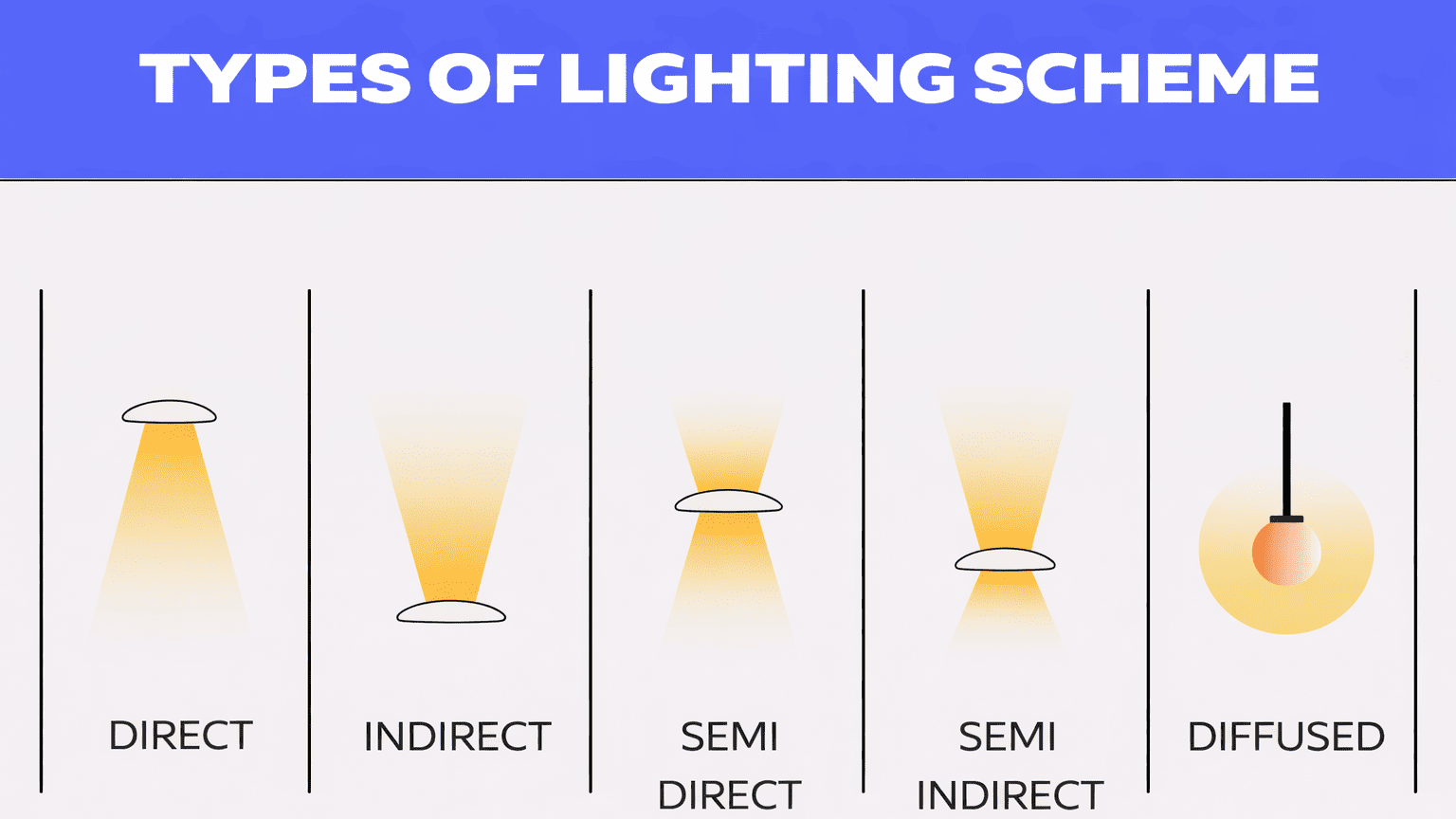
A lighting scheme describes the way light from a lamp or luminaire is distributed inside a room. By using reflectors, shades and diffusing screens, the designer can control how much light reaches the working surface and how much light is reflected by the ceiling and walls. A good lighting scheme improves visibility, creates visual comfort and enhances the architectural appearance of an interior.
Depending on the direction in which light reaches the surface, lighting schemes are commonly classified into the following types.
- Direct lighting
- Semi direct lighting
- Indirect lighting
- Semi-indirect lighting
- General lighting
Direct lighting schemes
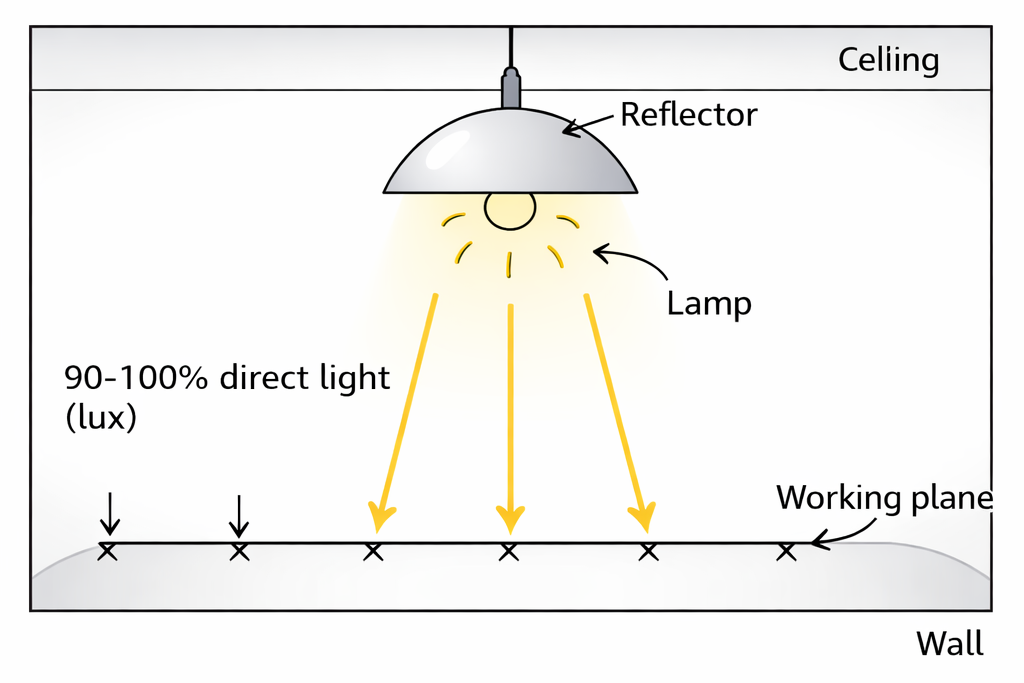
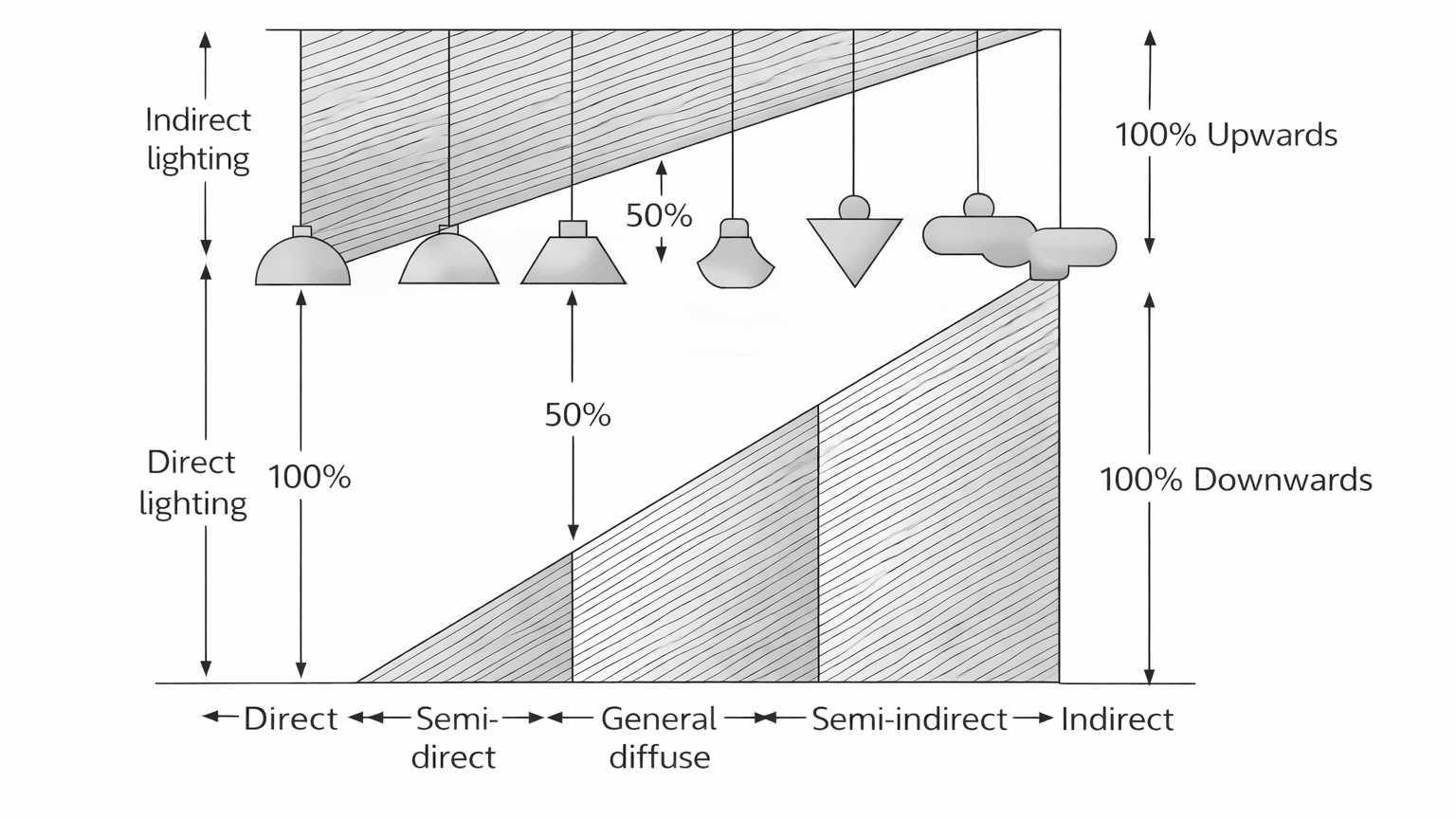
Direct lighting scheme is most widely used for interior lighting scheme. In this scheme, by using deep reflectors, it is possible to make 90% of light falls just below the lamp. This scheme is more efficient but it suffers from hard shadows and glare. Hence, while designing such schemes, all the possibilities that will causeglare on the eye have to be eliminated. It is mainly used for industrial and general outdoor lighting
Semi direct lighting schemes
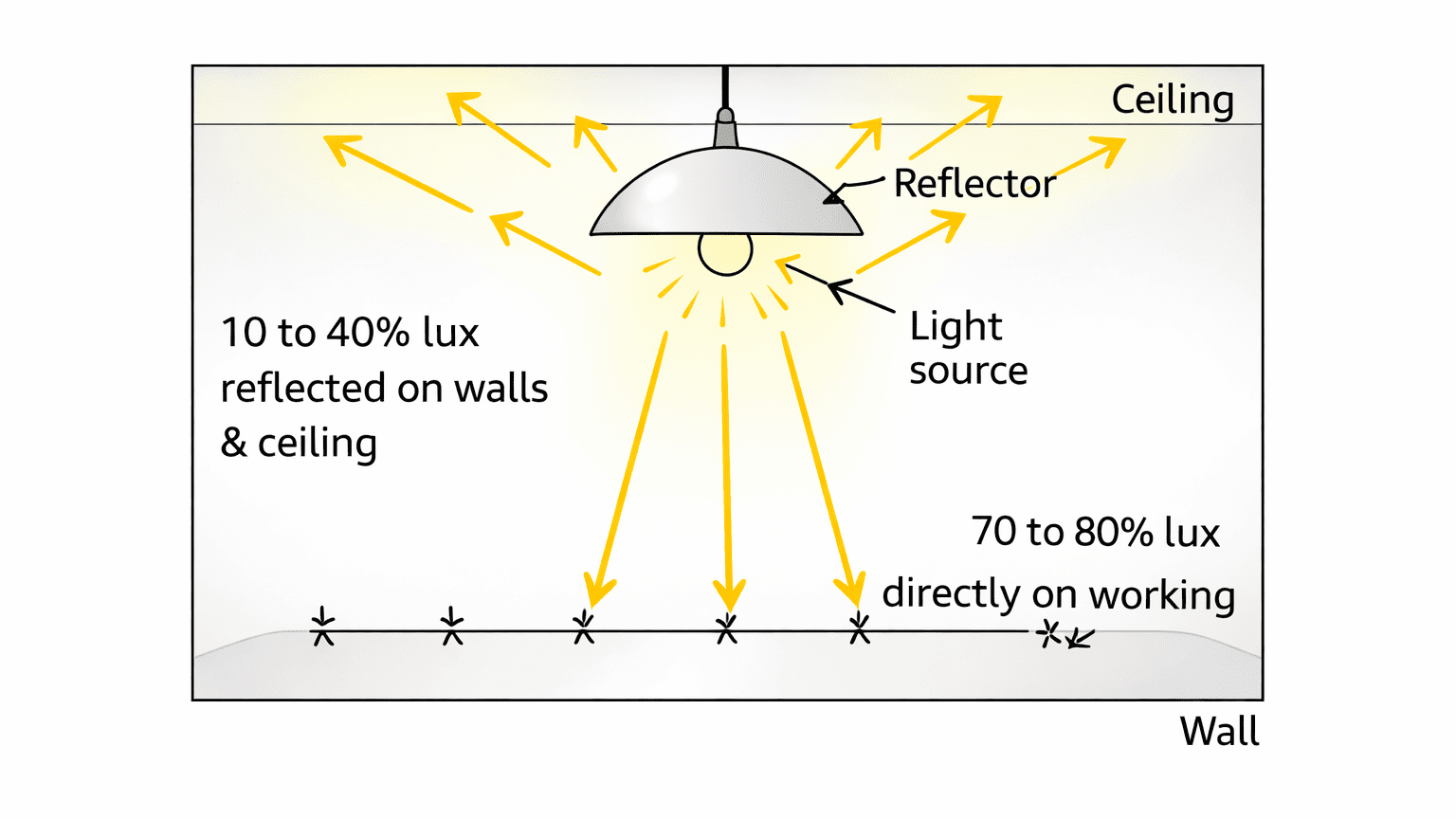
In semi direct lighting scheme, about 70–80% of lamps luminous flux is made to fall downward directly by using some reflectors and the rest of the light is used to illuminate the walls and ceiling. This type of light scheme is employed in rooms with high ceiling. Glare can be avoided by employing diffusing globes. This scheme will improve not only the brightness but also the efficiency of the systems with reference to working place.
Indirect lighting schemes
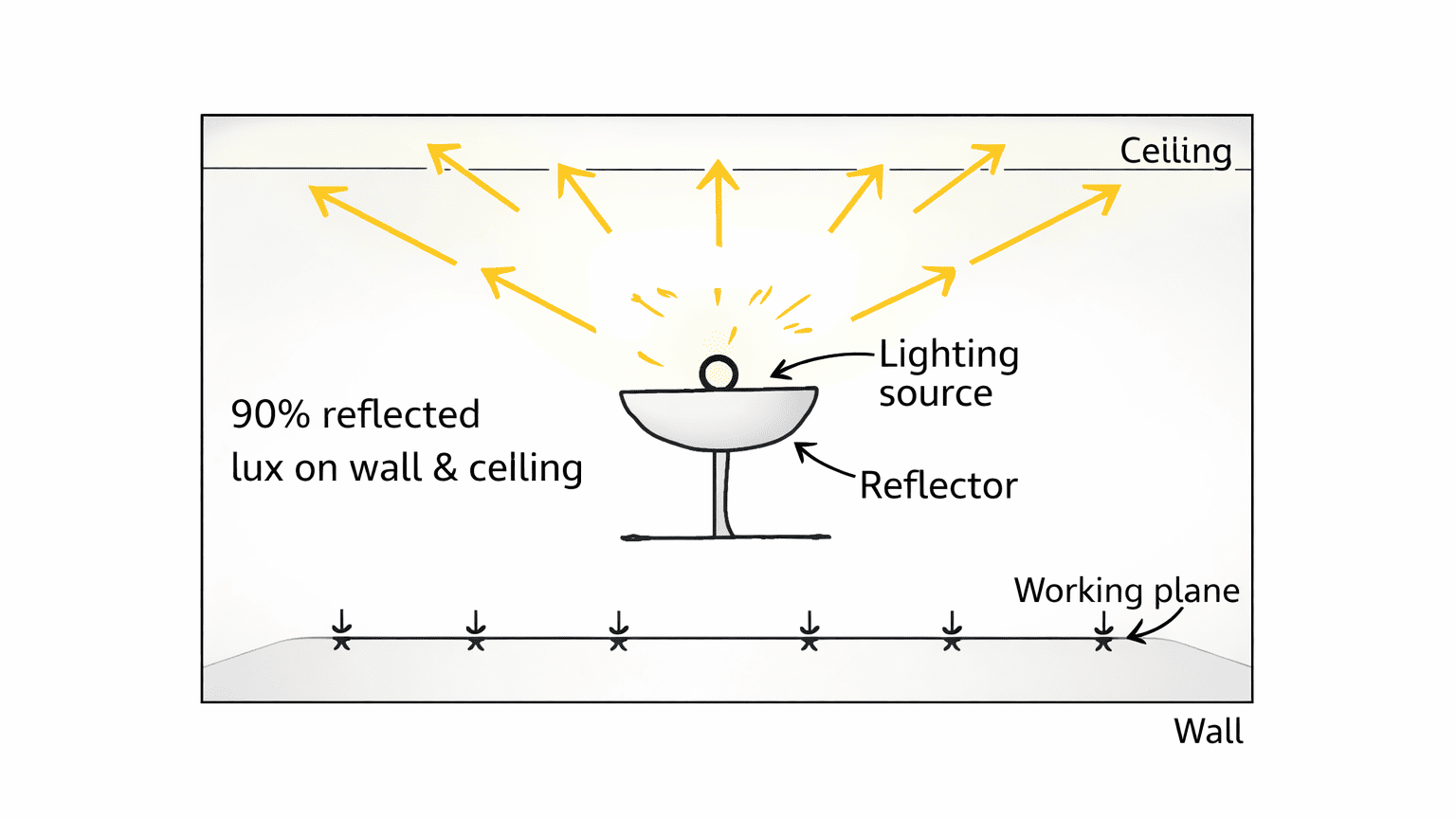
In this lighting scheme, 90% of total light is thrown upwards to the ceiling for diffuse reflection by using inverted or bowl reflectors. In such scheme, the ceiling acts as the lighting source and glare is reduced to minimum. This system provides shadow less illumination, the resulting illumination is softer and more diffused, the shadows are less prominent and the appearance of the room is much improved over that which results from direct lighting. It is used for decoration purposes in cinemas theatres and hotels etc. and in workshops where large machines and other obstructions would cause trouble some shadows of direct lighting is employed.
Semi-indirect lighting schemes
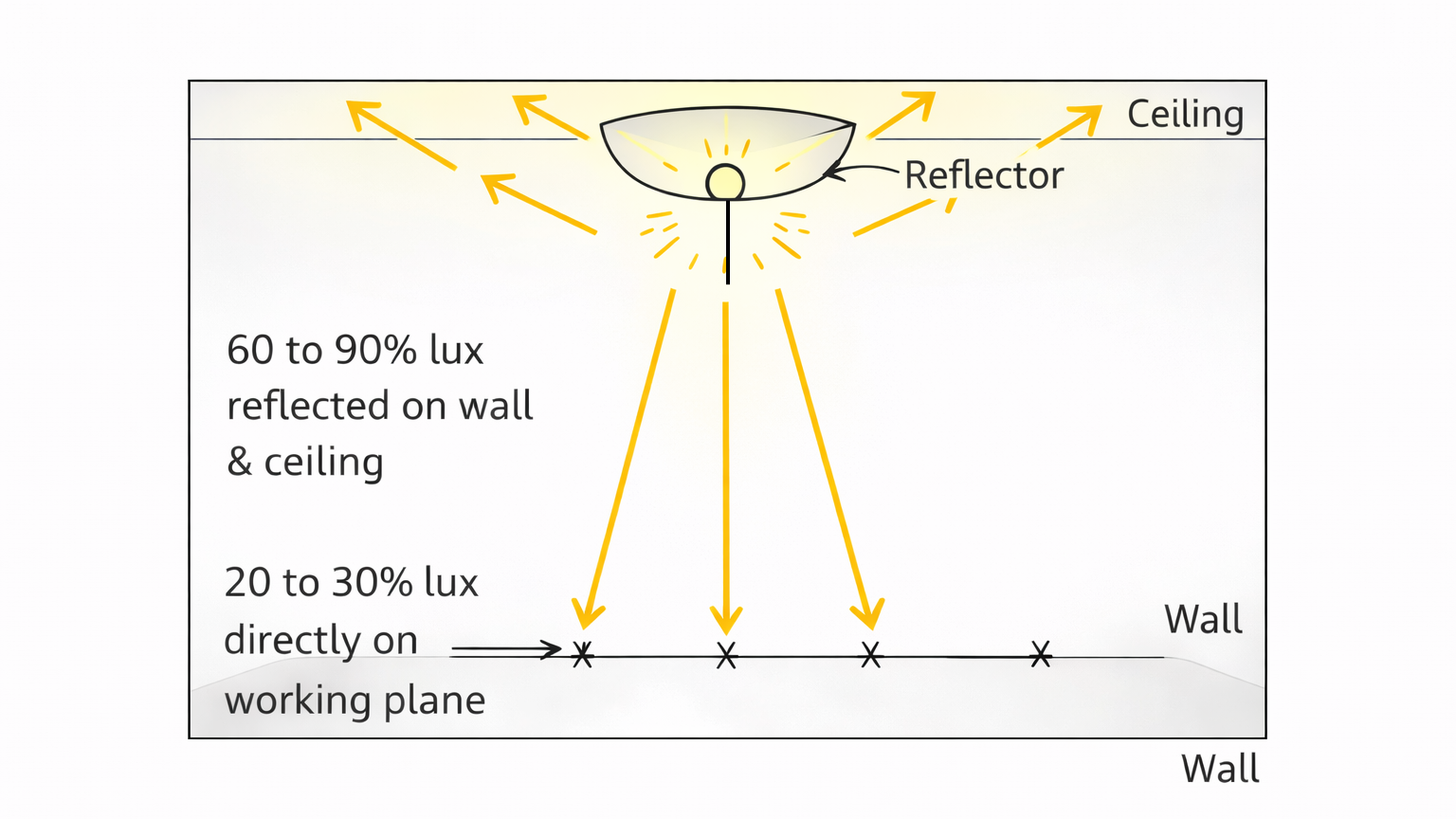
In semi-indirect lighting scheme, about 60–90% of light from the lamp is thrown upwards to the ceiling and the remaining luminous flux reaches the working surface. Glare will be completely eliminated. This scheme is widely preferred for indoor lighting decoration purpose.
General lighting scheme
This scheme of lighting use special diffusing glasses to spread the light uniformly on tile working plane. It produces the equal illumination in all directions. Mounting height of the source should be much above eye level to avoid glare.
Following Figure gives the idea of all the above five types in a schematic diagram with percentage division of light illumination.
Related Posts:
Design of Lighting Scheme
A lighting scheme should be planned in such a way that it satisfies both visual comfort and practical working needs.
The main requirements of a good lighting scheme are given below.
A good lighting scheme should have:
- provide sufficient illumination for the type of work being carried out,
- ensure uniform distribution of light over the entire working plane,
- produce light of a suitable and comfortable colour,
- avoid glare and hard shadows as far as possible.
While designing a lighting scheme, the following important factors must be considered.
Illumination level
The illumination level required depends on the nature of the task. Fine and detailed work needs higher illumination, while general movement areas need comparatively less light. The selected lighting arrangement must be capable of maintaining the required lux level on the working plane. Over lighting should also be avoided, as it causes glare and visual discomfort.
Size of the room
The length, width and height of the room directly affect the number of lamps and their arrangement. Large rooms require more luminaires and proper spacing to maintain uniform light distribution. Room proportions also influence how light spreads and how reflections from walls and ceilings contribute to the overall brightness.
Mounting height and spacing of fittings
The mounting height of luminaires decides how widely the light spreads on the working surface. If fittings are mounted too high, illumination becomes weak, and if they are mounted too low, glare and uneven lighting may occur. Proper spacing between fittings is necessary to avoid dark patches and overlapping bright zones. Correct selection of mounting height and spacing helps in achieving uniform illumination and better visual comfort.